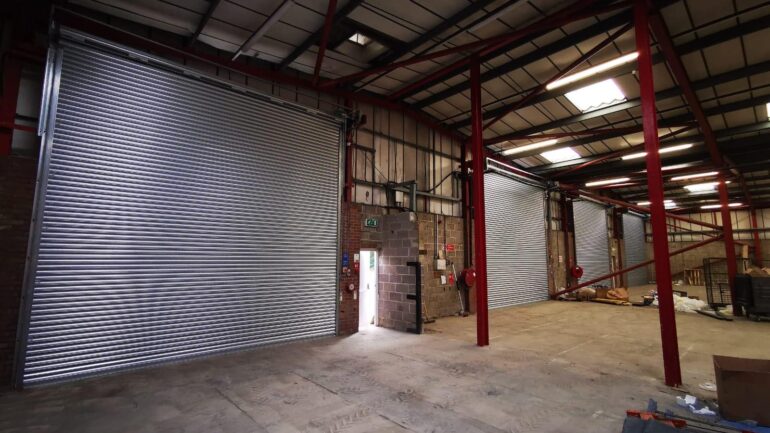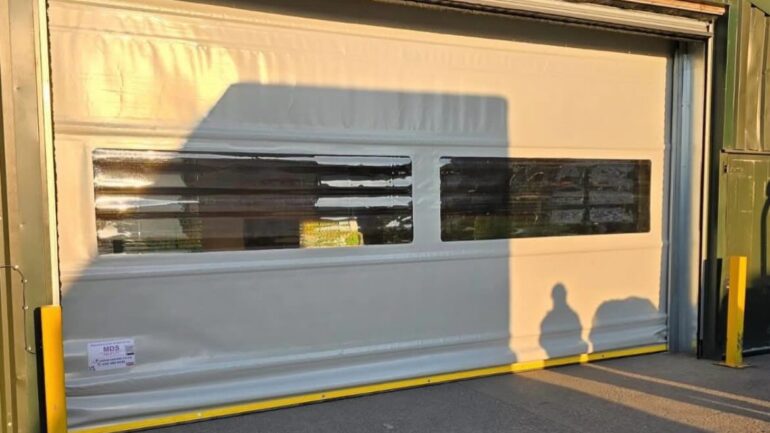
In logistics or any fast-paced industry, time isn’t just money, it’s your ultimate competitive advantage. Every shift manager or logistics planner knows that a smooth, uninterrupted workflow is the holy grail of warehouse operations. However, in many logistics facilities, a common bottleneck that’s hiding in plain sight is conventional industrial roller shutter doors.
If your forklifts, pallet trucks and personnel are constantly having to hit the brakes and wait for slow moving doors to open, you are losing productivity by the second. It’s time to look at how upgrading to high speed industrial doors can fundamentally transform your warehouse productivity and eliminate these frustrating bottlenecks.
Key points:
- The hidden bottleneck: Conventional industrial roller doors force forklifts and personnel to stop and wait, which constantly drains warehouse productivity.
- Significant time savings: While a traditional door might take 15 seconds to open, a high speed door can open in just 3 seconds.
- Seamless workflow: Operating at speeds of up to 1000mm per second allows vehicles to pass through openings without stopping.
- Reduced equipment wear: Removing the need for constant stop-and-go traffic reduces the wear and tear on forklift engines, tyres, and brakes, which helps lower maintenance costs.
- Climate and safety control: The fast action of these doors prevents massive energy loss in climate-controlled zones to reduce utility bills, while advanced safety features like breakaway edges and photo-cell sensors prevent workplace collisions.
- Bottom line impact: Upgrading to high speed doors recovers hundreds of hours in lost labour and supercharges overall efficiency.
The Invisible Toll of Conventional Doors
Picture this scene in your facility:
A forklift driver approaches a loading or exterior opening. They stop, step off their vehicle to push a button and then wait for a heavy, conventional roller shutter to slowly open. They drive through and the door slowly closes behind them.
When you think about this instance in isolation, a 15-to-20 second wait doesn’t seem so bad, but when you consider that you will need to multiply those seconds by each time the door will need to cycle each shift, and potentially across multiple doors or for multiple vehicles or pedestrians, the cumulative impact on traffic flow is huge.
The Hidden Costs of Waiting for Doors
To truly understand the bottleneck of a slow-moving door system, it’s important to look at the hidden costs of waiting for a conventional door versus high speed doors. For example, a high speed door that is 3 metres high can open in as little as 3 seconds (operating at speeds of up to 1000mm per second).
The Productivity Calculation:
- Conventional door: 15 seconds
- High speed door: 3 seconds
- Time saved per cycle: 12 seconds
Imagine a busy warehouse where the door cycles 200 times each 8-hour shift. 12 seconds saved 200 times equals time savings of 2,400 seconds (40 minutes) saved per day, per door.
For a facility that runs three shifts a day, that is 2 hours of lost productivity spent waiting for a single door to open. When you attach monetary value to that time, across a year, the hidden costs of a slow door easily exceed the cost of a fast action door upgrade.
How High Speed Industrial Doors Boost Traffic Flow
Integrating high speed industrial doors into your warehouse or distribution centre infrastructure doesn’t just give back lost time, it actively accelerates your operations.
- Uninterrupted flow
With opening speeds of up to 1000mm per second, automated high speed doors allow forklifts and other vehicles to move through openings with minimal deceleration. The door is open by the time the vehicle reaches it, creating a seamless movement of goods from point A to point B.
- Reduced wear and tear
Stop and go traffic takes more of a toll on forklifts and other material handling equipment. By eliminating the need to stop, you reduce the wear on forklift brakes, tyres, and engines, lowering maintenance costs.
- Energy and climate control
While traffic flow is the primary benefit, it’s important to consider that the speed of modern high speed industrial door systems minimise the time environments are exposed to one another. For climate-controlled zones, high speed industrial doors prevent massive energy loss, meaning HVAC systems don’t have to work as hard and utility bills are reduced.
- Safety
Modern high speed doors feature advanced safety technology, like photo-cell sensors, and breakaway edges, reacting instantly to prevent collisions and ensuring that accelerated traffic flow does not compromise on warehouse safety.
High Speed Doors and Your Bottom line
For business owners and logistics planners, optimising your facility requires a close look at any friction points that slow your team down on a daily basis. For many businesses, conventional roller shutter doors are a legacy friction point that are simply not suitable for modern supply chains.
By investing in high speed doors, you’re gaining hundreds of hours of lost labour, protecting your interior climate, and supercharging your overall productivity.
If you feel like it’s time to keep things moving by investing in high speed industrial doors that are fit for 2026 and beyond, talk to MDS Industries.