Worried about the condition of your commercial roof? As we get further into the autumn months, you risk running out of opportunities to inspect your roof and address any issues before the cold and wet weather arrives, so join us as we walk you through the steps to check your roof.
1. Locate Any Visible Damage
The harsh weather that we have been experiencing will likely have exposed any cracks or structural issues that your roof has, and may even have made them worse. So, to get started, begin by walking the perimeter of your building and taking a look at the sides of your commercial roof for any cracks, holes, or missing shingles, and ask your employees if they have noticed any drafts or leaks from the roof inside the building.
2. Check for Leaks
Next, take a look inside your premises for signs of water stains on the ceiling or walls, as these could be a result of hidden cracks letting water into your building and causing leaks.
Then take a look at the roof surface to identify any sagging or uneven areas, as this indicates areas of pooling water due to poor drainage. This is particularly common for buildings with flat roofs, as rain and snow can quickly build up and put pressure on the building unless channelled away properly.
3. Assess Seals
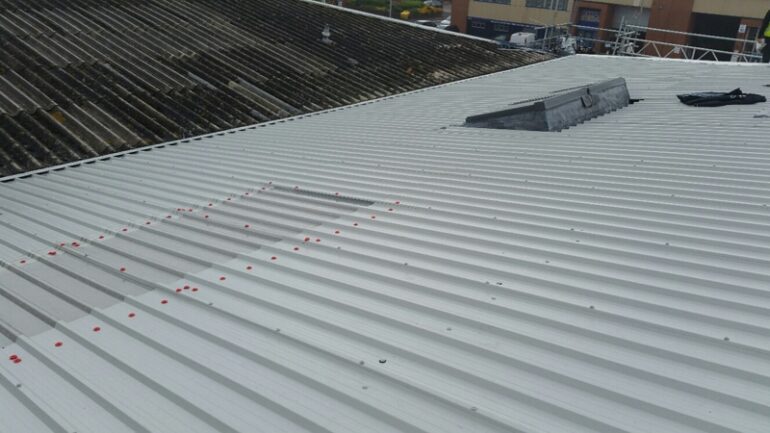
It is unlikely that your roof is just one flat structure – most commercial or industrial buildings are fitted with vents, air conditioning units, and chimneys, as well as skylights or other fixtures.
Over time, these structures become common points for roof leaks, as they are essentially openings into the building and their seals can become worn down and damaged. So, check the seals and strips that secure these areas for any signs that they are becoming damaged or loose, and make sure that they aren’t causing damage to the surrounding roofing materials. You can even pour water on them if needed to check that they are still watertight and can be relied upon for the coming months.
4. Remove Any Plants
Most buildings have a small growth of moss or algae which builds up quickly during periods of excessive rainfall. This is usually not much of a problem but it may quickly start to damage roofing materials if left untreated for too long.
These plants retain moisture which can erode the underlay and roof membrane, and the excess weight of the plants also puts pressure on the slates. Once any damage is done this moisture will quickly leak through into your premises and cause mould, so make sure that you arrange to have any moss removed and have the roof examined for any rotten or weakened structural elements.
5. Clear Gutters
Whilst technically not part of a roofs’ structure, these fixtures protect buildings by channelling rain and snow off the roof and away from the building.
If they become clogged with twigs, leaves, or any industrial debris that is blown into your roof by the wind, then this can lead to water pooling on the roof or in the gutters and causing leaks. So, clear any of these blockages out of your gutters and check that your gutter spouts are channelling water away from the building, rather than letting it pool around your entryways.
Scheduling Inspections From A Commercial Roofing Contractors
Keep this checklist to hand throughout the next few weeks as you get your premises ready for the winter months – but if you notice any severe issues or you are unable to identify the cause of any leaks, call in Universal Contracting to make the necessary repairs.